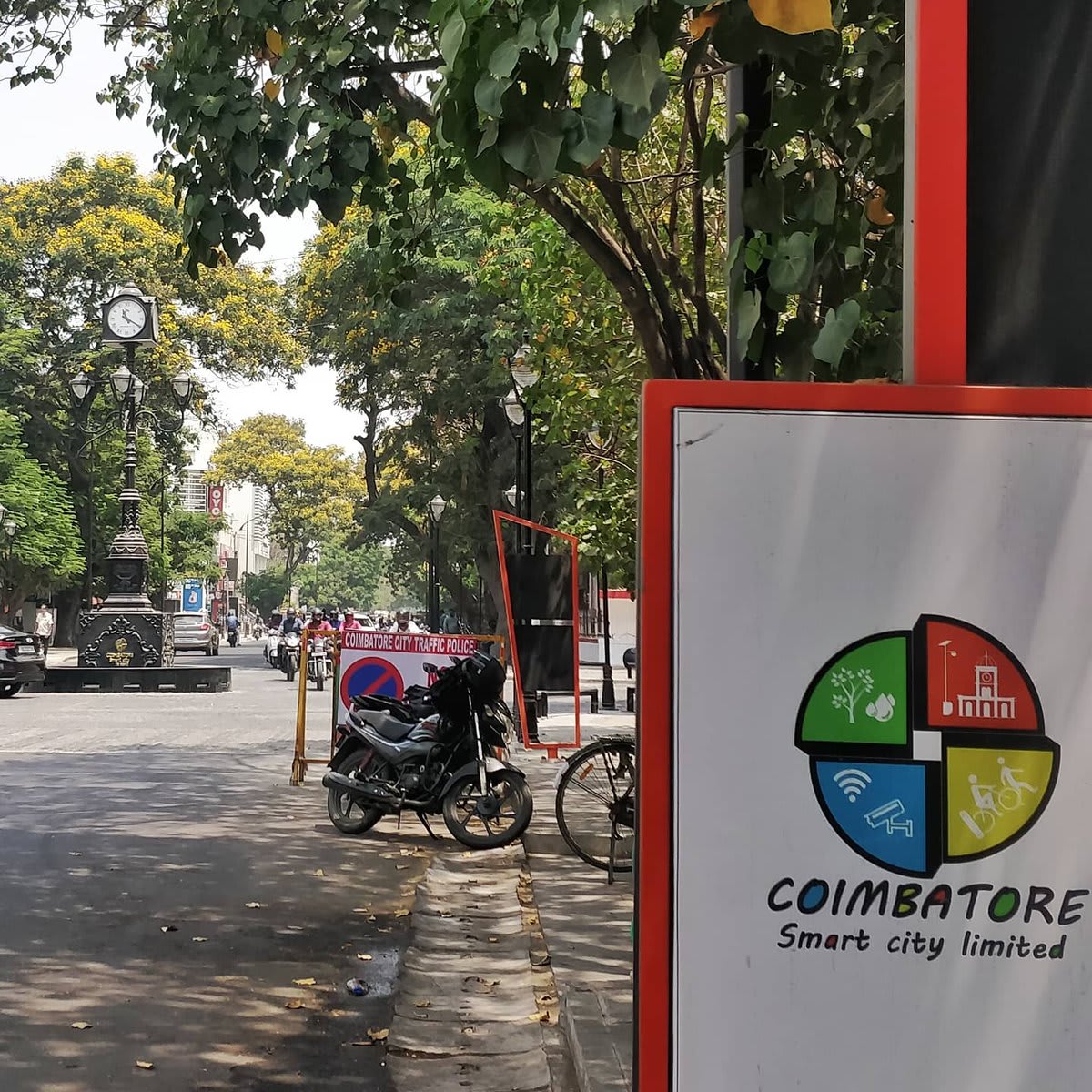
In the arithmetic of elections, not all polling stations carry equal risk. For the 2026 Tamil Nadu Legislative Assembly poll, Coimbatore district has classified 182 booths as “vulnerable”—a label that does not imply guilt or forecast violence, but flags locations where history, geography, social cleavages or past incidents suggest that extra vigilance could make the difference between a smooth vote and a contested one. Seventy-eight of these stations fall under Coimbatore City Police limits; 104 lie within the District Police jurisdiction covering outer wards and rural belts. Against the district’s total of 3,540 polling stations—including eight auxiliary booths—the vulnerable set is a sliver numerically, yet disproportionately important for deployment planners who must stretch personnel, micro-observers and communication links without leaving the remainder understaffed. Transparency about the purpose of the tag—risk management, not community indictment—helps voters interpret police presence calmly rather than anxiously.
The district’s urban-rural split on paper—2,537 urban stations and 1,026 rural—mirrors Coimbatore’s hybrid identity: a dense core of commerce and education surrounded by panchayats where agricultural schedules, transport frequency and mobile connectivity differ from inner-city rhythms. Vulnerability mapping tries to capture that diversity: a booth squeezed into a narrow lane may face crowd-crush risks; another on a state highway may contend with vehicular intimidation; a third in a communally sensitive pocket may need confidence-building measures beyond standard security.
Election Commission guidelines evolve cycle to cycle, incorporating lessons from previous polls across India. District election officers combine quantitative parameters—margin of victory last time, incidence of NOTA, turnout anomalies—with qualitative inputs from police, revenue officials and local mediators. The list is dynamic: a booth can be added or dropped as situations change, though late alterations strain logistics.
Machine-readable rolls and apps have reduced impersonation risks, yet human tensions persist where family disputes spill into public space or where workplace supervisors hover too close to booths. Vulnerability assessments therefore consider social ecology—not to stereotype communities but to anticipate friction points that a neutral presiding officer might still have to navigate.
Coimbatore’s migrant workforce—drawn to textiles, engineering and services—sometimes votes in home districts via postal ballot but also appears on local rolls where residence proofs exist. Mixed-language help desks become important at booths where Telugu, Malayalam or Hindi speakers outnumber Tamil monolingual volunteers; training modules have begun reflecting that reality.
What “vulnerable” means in practice
For voters, the most visible differences may be heavier police pickets near the 100-metre perimeter, queue markers laid out earlier, and occasional webcasting or video surveillance teams. Presiding officers receive the same statutory training everywhere, but sector magistrates may visit vulnerable booths more frequently. Candidates’ agents watch closely—any procedural lapse at a sensitive station can become a flashpoint in post-poll litigation. Sound-level meters sometimes appear near crowded booths when loudspeaker complaints spike—another layer of technical oversight that sits awkwardly between festival culture and statutory silence zones.
Vulnerability is not a stigma on a neighbourhood; it is a risk-management tag. Officials emphasise that many such booths record entirely peaceful polling. The tag ensures resources exist if rumours spread, if tempers flare at the help desk, or if outsiders attempt to cluster unlawfully near entry points.
Queue architecture matters: single-file lines snaking into sunlit courtyards test patience differently than shaded corridors. Where vulnerable booths coincide with schools hosting board exams, sound levels and parking become doubly sensitive—election officers sometimes shift auxiliary arrangements to spare adolescents two crises in one week.
City versus district police jurisdictions
The 78 city-limit stations and 104 district-limit stations reflect administrative boundaries more than moral judgments. City police handle denser traffic, closer CCTV grids, and faster reinforcements; district police cover farther flung stations where travel time from the nearest armed reserve can stretch. Coordinating two commissionerates under one district election officer requires shared control-room vocabulary so that a caller reporting an incident does not bounce between helplines.
Peripheral areas sometimes see competitive mobilisation when local caste or community equations align with tight contests. Police deployments attempt to be visibly even-handed—randomisation of routes for patrolling vehicles, mixed teams where appropriate, and clear orders on dealing with unauthorised congregational pressure near booths.
Highway-adjacent booths must also manage heavy vehicle noise and dust—temporary barricades channel voter foot traffic away from truck lanes, a detail that rarely appears in policy PDFs but shapes elderly voters’ sense of safety.
Auxiliary booths and urban congestion
Eight auxiliary booths exist to split overloaded buildings or to serve new voter clusters. When a primary school already hosts multiple booths, adding auxiliary capacity nearby can reduce queue lengths—important in vulnerable contexts where crowding can spark scuffles. Mapping vulnerability alongside auxiliary locations ensures micro-observers are not spread thin chasing last-minute changes.
Role of surveillance and observers
Flying squads and static surveillance teams intersect with vulnerable lists when intelligence suggests movement of cash or liquor aimed at influencing voters near flagged stations. Video surveillance teams add another layer, though bandwidth and power backup remain practical constraints in some rural pockets. Election observers appointed by the Commission can escalate recommendations if they perceive gaps—extra paramilitary pickets, route marches on eve of poll, or community meetings to lower tension.
Micro-observers—often drawn from central services cadres—may be tasked to specific booths on the vulnerable roster, providing granular reporting on queue management, assistance to vulnerable groups, and closure procedures. Their presence raises the stakes for presiding officers to document meticulously.
Liquor enforcement near queues intersects with booth management: teams aim to remove visibly intoxicated individuals without spectacle, preserving voter dignity while keeping lines orderly. Briefings emphasise de-escalation language—especially when smartphone cameras hover.
Social media and rumour risk
In 2026, misinformation travels faster than jeep-borne patrolling. A clipped video from a sensitive booth can go viral before context arrives. District information cells attempt real-time rebuttals; police appeal for verified sharing. Vulnerable booths therefore attract not only physical security but also communication strategists who coordinate with local influencers to dampen panic.
Encrypted forwards claiming booth captures sometimes originate from old footage; fact-checkers maintain repositories of debunked clips to aid quick responses. Still, the first hour after a viral post remains precarious—local journalists on beat duty become accidental first responders, telephoning presiding officers for on-record clarity.
Inclusion and confidence-building
Vulnerability mapping must not translate into voter profiling. Authorities stress that assistance desks for senior citizens, persons with disabilities and third-gender voters operate with dignity at all stations, sensitive or not. In some areas, women’s self-help groups volunteer as non-partisan queue marshals—community legitimacy can soothe nerves where uniformed presence alone might not.
Braille ballot guidance and wheelchair-friendly temporary ramps are unevenly available; when a vulnerable booth coincides with poor accessibility, sector magistrates may authorise last-minute shifts to ground-floor rooms—paperwork-heavy but morale-boosting for voters who might otherwise stay home.
Candidates, agents and law
Polling agents nominated by candidates have the right to observe procedures; they also sometimes test limits. Training sessions for agents emphasise that disputes follow escalation ladders—presiding officer to observer to returning officer—rather than street confrontations. Vulnerable booths see more such interactions; patience and rulebook clarity become premium skills.
Legal aid volunteers and civil society help desks—where deployed—assist voters who fear their names were deleted without due process; rapid verification against the electoral roll server can prevent a local rumour from becoming a district-wide panic.
After polling: strong rooms and counting
Vulnerable labels also influence transport routes for EVMs to strong rooms, escort strength, and randomization of counting tables. The chain of custody must withstand legal scrutiny if results are challenged. A booth flagged for vulnerability that records a flawless process strengthens overall electoral credibility.
Night convoys through poorly lit stretches require advance notice to village chowkidars and bus drivers so that ordinary traffic does not mistake police escorts for emergency raids—communication reduces accidental panic.
Civil society watch
NGOs and election watchdogs often deploy volunteers to sample vulnerable booths—documenting queue times, accessibility, and police behaviour. Their reports feed public discourse and sometimes corrective action mid-day if systemic issues appear—say, a single help desk overwhelmed by name mismatches on rolls.
Student volunteers sometimes run drinking-water tables at a respectful distance from the 100-metre line—hydration without campaigning, a fine line that district manuals now illustrate with diagrams.
Limits of labelling
Not every incident-prone area may enter the official 182 if data lags; conversely, some listed booths may see uneventful polls. The map is probabilistic. Residents should treat the classification as a prompt for vigilance rather than a verdict on their locality’s character.
Appeals and litigation sometimes follow if voters believe booths were mis-batched or if police presence felt excessive; courts generally defer to election authorities absent evidence of mala fide targeting—another reason why documentation at the sector level must be airtight.
What officials want voters to know
Come early if possible, carry prescribed ID, check booth numbers on the voter slip or app, and report intimidation immediately. Helplines and mobile apps exist precisely so that vulnerability is managed collectively—not only by gun barrels but by timely information flows.
Parents bringing children should keep them clear of heated arguments—booth areas are no place for campaign debates; presiding officers can ask agitated groups to step outside the 100-metre zone if decibel levels threaten order.
Broader district context
Coimbatore’s 3,540 stations sit inside ten Assembly constituencies where campaigns have been vigorous. The 182 vulnerable markers are threads in a larger tapestry—polling personnel training, postal ballots, service voters, and counting-day transparency. Get this layer right, and the district’s overall election narrative leans toward credibility; get it wrong, and isolated incidents overshadow otherwise well-run processes.
Psephologists may compare vulnerable-booth densities across western Tamil Nadu districts, but for the voter in line, the presiding officer’s tone matters more than spreadsheets—though benchmarking still helps administrators avoid both complacency and over-flagging.
Looking ahead
As polling day nears, expect adjusted deployments and occasional public advisories on routes near sensitive booths. Patience at checkpoints, courtesy toward polling staff, and refusal to amplify unverified clips will help vulnerable stations function like any other—in calm, orderly queues where democracy’s machinery does its quiet work.
Finally, families planning weddings or funerals on polling day—dates sometimes clash despite best intentions—should remember that booth staff cannot bend closing-hour rules; vulnerable or not, the statutory window is the same for everyone. Forethought about transport and elder companionship matters more at booths where crowds peak sharply before lunch.
Frequently asked questions
Does vulnerable mean unsafe for me to vote?
Not necessarily. It means extra monitoring and security; authorities aim to ensure safe, free voting for everyone.
How is the list decided?
Based on past incidents, margins, social dynamics, terrain, intelligence, and recommendations from field officials—reviewed by election authorities.
Can a booth be removed from the list?
Yes, if assessments change, though late changes are operationally difficult.
What should I do if I see intimidation?
Inform polling staff and police, use EC helplines or cVIGIL where applicable, and note booth details for follow-up.
Are rural booths more likely to be vulnerable?
Not automatically; both urban and rural stations appear depending on specific risk factors, not geography alone.
Will vulnerable booths take longer?
Queues depend on turnout and staffing; extra security should not delay verified voters if procedures run smoothly.
Can I switch booths if mine feels tense?
No—voters must use assigned booths on the roll unless election authorities formally redirect you after verification.
Are vulnerable lists public?
Summaries may appear in training materials for parties; exact micro-deployment details are operational and not always published in full for security reasons.
Does extra security mean longer document checks?
Verification rules are identical; additional personnel are for safety and order, not to slow legitimate voters unnecessarily. If queues lengthen, it is usually due to turnout spikes, not security alone—arrive early, carry water, and help elders where you can. Calm queues are everyone’s responsibility, especially at booths flagged for sensitivity—small courtesies prevent avoidable friction on polling day across Coimbatore district this election season.