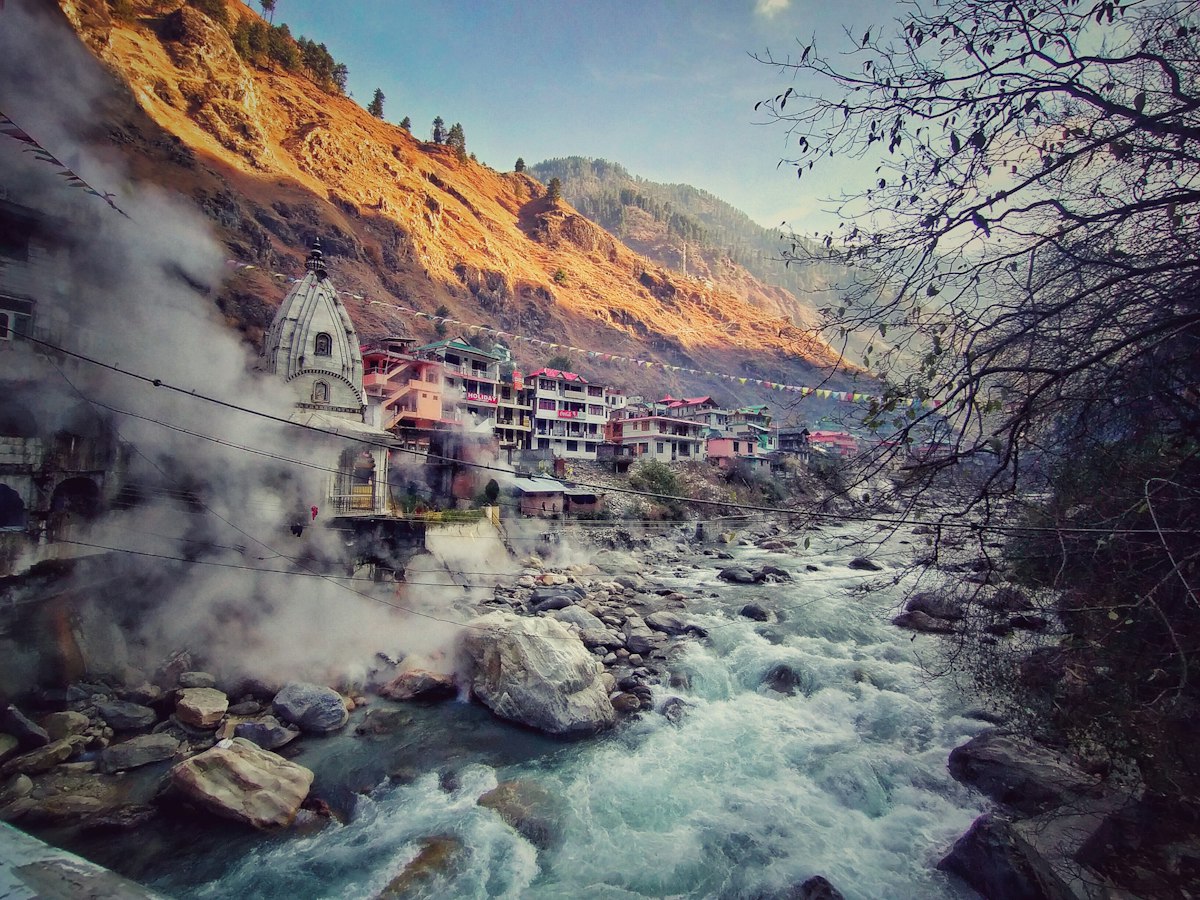
For decades, Coimbatore’s relationship with the Noyyal has been one of dependence, anxiety and occasional hope: the river fed fields and folklore, absorbed urban growth, and bore the invisible burden of sewage, silt and encroachment. When the Tamil Nadu government earmarked Rs 202.5 crore for the Coimbatore Corporation to pursue a structured river front development programme, the announcement landed as more than a line item in a budget speech—it read like a civic vow to treat the Noyyal as a living landscape, not a concrete-lined afterthought. Officials summarised the intent as restoration and development of the frontage: widening public access, carving green buffers, and layering recreational amenities where engineering and ecology can coexist without repeating the mistakes that turned urban rivers into drains in other cities.
The Noyyal’s course stitches together Coimbatore district’s imagination—temple tanks, textile units that once banked on its flow, and neighbourhoods that expanded toward its banks when land prices climbed. River-front projects, when sincere, must therefore speak simultaneously to flood resilience, water quality, biodiversity, and the simple human desire to watch a child cycle beside a tree line without inhaling exhaust from a service road masquerading as a “promenade.” Rs 202.5 crore is neither infinite nor trivial; spent wisely, it can seed systems—sewer interceptors, nature-based buffers, walking loops—that compound; spent narrowly, it risks becoming ornamental kerbs and photo walls that peel before the next monsoon.
Coimbatore’s residents have heard river promises before; credibility now rests on transparent designs, time-bound procurement, and ruthless coordination with agencies that hold the real levers—storm-water drains, sewage treatment, solid waste, and illegal dumping enforcement. A river front is only as clean as what upstream municipalities stop sending downstream.
The Noyyal also sits in the imagination of pilgrims and poets—Perur’s antiquity a few bends away, Siruvani’s hills feeding tributary dreams in kitchen-table conversations. A river-front scheme that ignores cultural memory and treats the watercourse merely as a linear park risks feeling alien to citizens who grew up with other vocabularies for the same stream.
Downstream districts and towns remind planners that rivers do not respect corporation maps; what Coimbatore stabilises at the embankment still speaks to farmers, weavers and wetlands farther along. Regional coordination meetings—unexciting but vital—prevent upstream beautification from becoming downstream distress.
What the allocation is meant to do
According to the public framing when the project surfaced, the corporation’s mandate spans restoration and development—language that implies both undoing damage and adding civic value. Green spaces along urban rivers can lower heat islands, host birdlife if native species are planted, and give informal workers a dignified lunch-hour shade. Recreational facilities—play equipment, seating, fitness strips, cultural plinths—turn hydrology into sociology: people defend what they use, provided they are not priced out or harassed by arbitrary fees.
Engineering components likely include embankment stabilisation, erosion control, pedestrian pathways, possibly cycling tracks, lighting that respects night ecology, and universal access ramps. Drainage outfalls must be redesigned so monsoon surges do not rip fresh turf; trash booms and maintenance contracts must follow, or plastic flotsam will return for the evening news cycle.
International examples—from Seoul’s Cheonggyecheon debates to smaller Indian town renewals—warn that daylighting buried streams costs fortunes but can return air and sanity if paired with transit shifts. Coimbatore is not copying wholesale; the lesson is simply that hardware without behavioural and institutional change ages poorly.
Children’s safety near water—non-slip surfaces, fencing where needed, rescue equipment and clear depth signage—must be budgeted, not improvised after tragedies. Night lighting balances security for women walkers against glare that disturbs roosting birds; thoughtful lux levels matter.
The Noyyal in context
Unlike Himalayan torrents, the Noyyal is a monsoon-fed system whose moods reflect both sky and city. Dry-season trickles can flip to intimidating sheets when catchments dump runoff faster than channels absorb. Front development that raises embankments without widening flood plains—or without digital modelling of extreme events—can export problems to someone else’s ward. Integrated water resources thinking, dull as it sounds on a brochure, separates sustainable river projects from vanity berms.
Water quality narratives in Coimbatore often collide with industrial history and dense habitation. Citizens distinguish between the smell of monsoon freshness and the tell-tale signs of untreated inflows. Any credible river-front scheme advertises not only benches but monitoring—online dashboards, third-party lab samples, and visible signage explaining when not to touch the water. Trust is a design parameter.
Textile processing clusters historically shaped both prosperity and pollution conversations in the region; modern zero-liquid-discharge norms and common effluent plants shifted the baseline, yet public memory lingers. Transparent communication on industrial compliance near the corridor—without scapegoating entire sectors—helps river projects avoid becoming culture-war proxies.
Land, encroachment and justice
River edges attract occupation—sometimes generations deep. Clearance without rehabilitation ignites political firestorms; negotiated setbacks with alternate tenures test administrators’ patience. Front projects succeed when land records, satellite imagery, and community councils align before bulldozers arrive. Courts have repeatedly reminded states that waterways are public trusts; the corporation’s legal cell will need airtight documentation.
Property markets watch river views; speculation can spike rents near freshly paved walks. Inclusionary policies—vendor plazas with modest rents, public toilets maintained to mall standards—keep gentrification from evicting the very street life that makes promenades feel lived-in rather than gated.
Biodiversity and native planting
Exotic ornamentals photograph well but seldom feed larvae or hold banks as tamely as misunderstood “weeds” that were actually local riparian species. Ecologists push for mixed native palettes—kadamba, portia, bamboo clumps where appropriate—interplanted with grass species that bind soil. Birders hope for shallow margins and snags; fishers along downstream stretches watch for dissolved oxygen trends. Small design choices ripple across food webs.
Invasive species control—like managing proliferating weeds that choke flow—needs annual budgets, not one-time volunteer drives. Butterfly gardens and interpretive boards turn ecology into pedagogy for school trips; QR-linked Tamil-English explainers help families self-guide on Sunday mornings.
Integration with sewage and solid waste
River fronts fail when parallel sewer mains lag. Coimbatore’s ongoing wastewater investments must handshake with promenade levels—invert levels mismatched by a metre can doom pumping budgets. Solid waste from nearby markets and festivals needs interceptors and night cleaning crews; otherwise, morning joggers become unpaid sanitation volunteers.
Desilting schedules must align with front aesthetics—mud barges and truck routes temporarily uglify promenades but prevent hydraulic choke. Communicating those cycles prevents “broken promises” narratives when citizens see trenches mid-beauty.
Climate resilience
Urban heat and unpredictable rain bursts make blue-green infrastructure economically rational, not merely aesthetic. Permeable pavements, bioswales beside walkways, and preserved floodplain pockets absorb spikes that concrete cannot. If Rs 202.5 crore locks everything into impervious granite, the city may win postcards and lose monsoon margin.
Heat action plans for promenade workers—pourers, gardeners, security—include rest shades and hydration posts; climate justice begins with labour on the hottest slabs.
Citizen participation
Successful river projects—from Sabarmati-style debates to smaller town revivals—share one trait: persistent public oversight. Ward committees, college NSS units, and resident associations can adopt micro-stretches for litter audits and native-tree watering. Transparent complaint apps reduce the sense that river governance is someone else’s department.
Photography bans, if any for security reasons, should be narrowly scoped; riverside sunsets belong to everyone’s album. Drone rules need clarity so enthusiasts do not clash with police unsure of latest aviation circulars.
Economy and culture
Well-used river fronts lift nearby small businesses—tea stalls, handicrafts, evening musicians—without tipping into mall homogenisation. Cultural calendars tying classical music or local theatre to amphitheatres can anchor identity. Coimbatore’s textile and engineering elites share the same evening breeze as mill workers if access is truly public.
Tourism brochures may someday feature the Noyyal alongside hill stations and temples; hospitality investors watch footfall metrics. Clean toilets and safe parking for outstation buses determine whether day-trippers return or flee after one selfie.
Monitoring and governance
Milestones should be published—landscaping phases, structural completion, water-quality baselines, post-project targets. Independent audits by institutions such as IIT collaborations or NGO partnerships lend credibility. Budget lines for five-year maintenance, not just inauguration bouquets, signal maturity.
Smart City overlays—if CCTV, Wi-Fi, or environmental sensors deploy—must protect privacy and avoid turning a civic commons into a surveillance panopticon without safeguards.
What sceptics ask
Will funds stick to ecology or slide into concrete-heavy shortcuts? Will STP outfalls be mapped before promenades open? Will encroachments reappear post-election cycles? These questions deserve answers in public forums, not only in file notings.
Looking ahead
If Rs 202.5 crore translates into cleaner water, safer floods, and democratic access, Coimbatore will have bought more than a river view—it will have bought a shared institution: a ribbon of green that reminds the city it still belongs to a watershed. If not, the Noyyal will keep teaching the old lesson—rivers forgive slowly, and never silently.
Reporters walking the future embankment will look for three mundane proofs before praising grandeur: Are storm drains labelled and mapped? Are STP outfalls visibly instrumented? Are maintenance tenders multi-year? Affirmative answers there outperform any bronze statue of a statesman pointing at water.
Architects sometimes sketch “activated edges”—cafés cantilevered over water—while hydraulic engineers whisper about scour and debris during spates. The negotiated drawing that survives is rarely the first render; citizens gain when those negotiations happen in view, not only in closed rooms.
Heritage and memory
Old photographs of the Noyyal—wider floodplains, fewer bridges—circulate in heritage WhatsApp groups. Restoration talk triggers nostalgia and grief in equal measure. Honouring memory without romanticising a return to pre-industrial hydrology is the adult conversation planners owe residents: what can be revived (tree cover, public access) versus what cannot (original channel widths under today’s built mass).
Temple tanks upstream still recharge aquifers when maintained; synergies between tank restoration missions and river corridors multiply groundwater benefits if sewage never reaches either.
Finance and procurement
Rs 202.5 crore will move through tender grids—civil, horticulture, electrical, possibly PPP elements for operations. Vigilant tender committees resist single-bid anomalies; geotechnical investigations before fancy finishes prevent costly retrofit when subsoil whispers otherwise. Asset registers tagging each lamp post and bench simplify handover between engineering and parks departments—boring databases that save crores in duplicated purchases.
Contingency lines for monsoon damage—floating debris smashing railings—keep maintenance teams from freezing when the first cloudburst tests fresh mortar.
Finally, school geography classes could adopt stretches for citizen science—pH strips, macroinvertebrate counts where safe—turning the Noyyal into a living syllabus rather than a line on a map.
Frequently asked questions
What is the sanctioned amount?
Rs 202.5 crore from the State to the Coimbatore Corporation for the Noyyal river front development programme, per official summaries.
Will I be able to walk along the river?
That is the stated intent—public access and recreation—subject to final designs and safety norms near water.
Is the water safe for contact?
Safety depends on real-time quality; follow official advisories, signage, and periodic test results once published.
How can residents contribute?
Avoid dumping waste into drains, participate in clean-ups, report illegal discharges, and engage in public consultations.
Who oversees construction quality?
Coimbatore Corporation engineering wings with relevant technical consultants; third-party supervision may apply to large contracts.
Will fishing or traditional uses continue?
Depends on safety, legal norms, and ecological recovery; local communities should watch official notifications for regulated access.
How is Rs 202.5 crore phased?
Phasing appears in detailed project reports and council approvals—citizens can request summaries through RTI or councillor briefings.
Will the project affect traffic nearby?
Construction will likely divert routes temporarily; follow corporation traffic advisories and plan alternate paths during peak civil work phases.
Are there public hearings?
Major civic works often include consultations or council debates; watch corporation notices and local press for scheduled open public forums.
Does this replace the need for STPs?
No—river beautification complements, not substitutes, sewage treatment and interceptor infrastructure along the entire urban reach of the Noyyal.